
The Borghese Gardens were once part of a country retreat, away from the heat and bustle of central Rome.
In the 17th century, Cardinal Scipione Borghese, nephew of Pope Paul V, began development of the current villa and gardens. The Borghese family continued the project in the 18th century and, throughout this time, the public could generally access the gardens.
In 1901 the Italian state acquired the Borghese Gardens and in 1903 ceded them to Rome for public use.


Today, this is a park where locals and visitors can relax or take exercise!
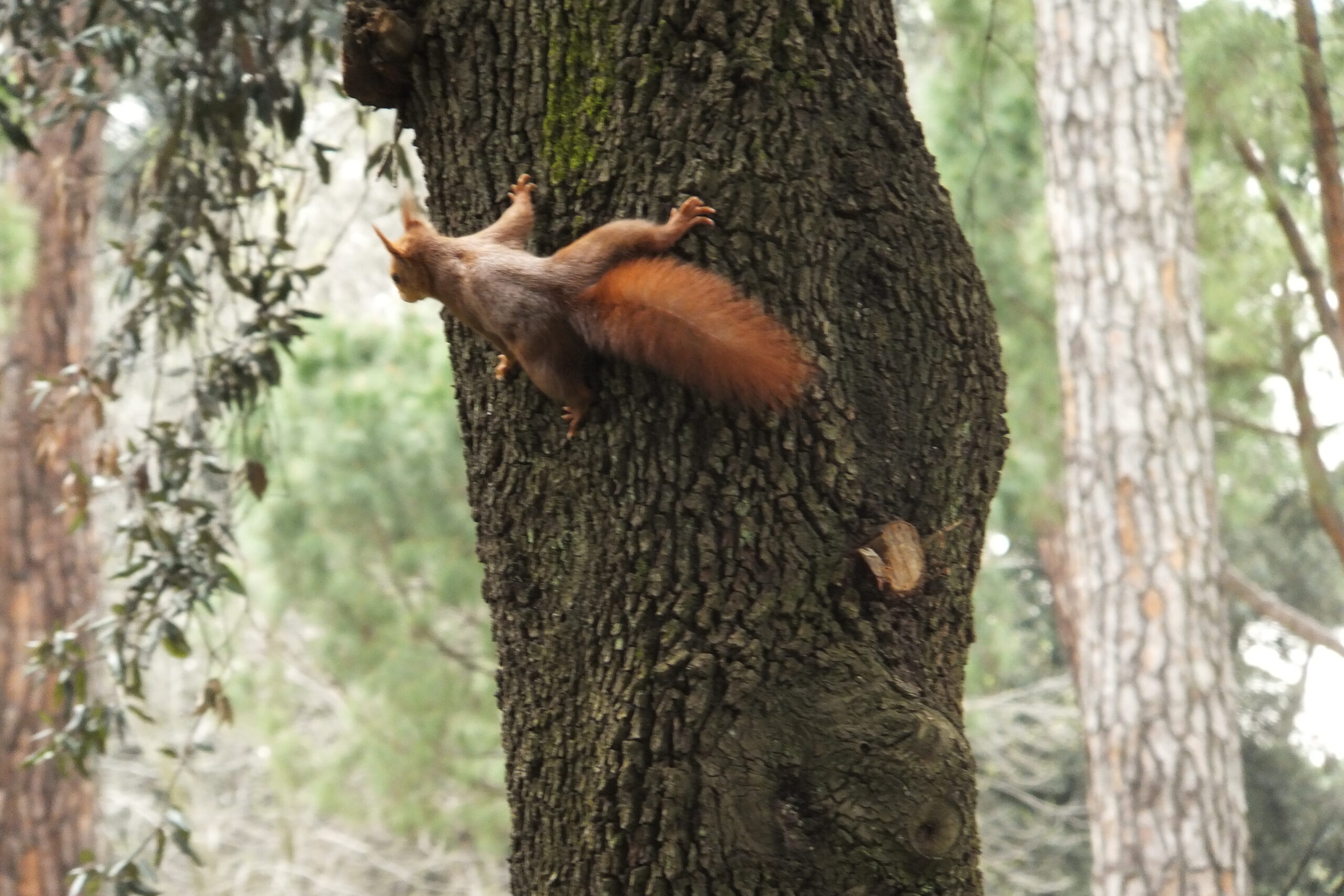
The gardens (depending on the time of year) have many attractions, including a small boating lake, a cinema and a children’s playground, as well as walks and wonderful views.
You could, of course, just sit on a bench and watch the world go by!
The Borghese Gallery
Within the gardens is the Villa Borghese, originally the main house on the estate. It is now home to the Borghese Gallery, which has a superb collection of art.

If you want to visit the Gallery, you must book in advance. The Gallery is relatively compact and it is possible to view the art within the allotted 2 hour time-slot.
Location
The gardens lie uphill, largely in the Pincio district, but include the area of the old Aurelian Wall, known as the Muro Torto (the crooked wall).
In the 6th century, when the Goths were besieging the city, they failed to take advantage of a breach in the fortifications here and the locals believed that the area had St Peter’s protection.
The gardens near the Muro Torto overlook Piazza del Popolo.

They also provide a view of the Villa Medici, home of the French Academy.

The views are different but equally spectacular as the light fades.

There are several entrances: this photo shows the entrance at the Porta Pinciana. You can reach it by walking up Via V. Veneto.
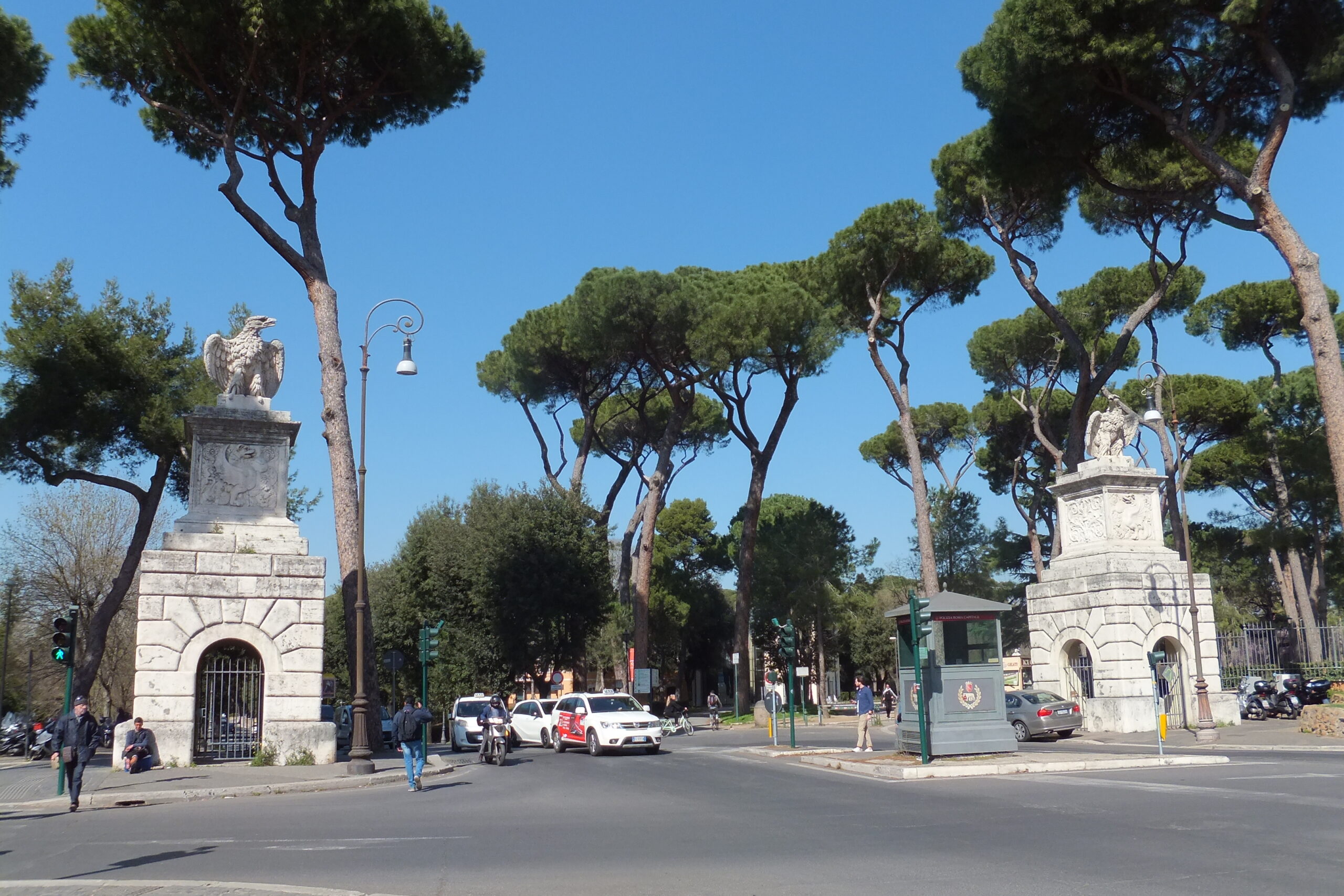
There are helpful signposts within the gardens. From this entrance, if you turn right, you will approach the Borghese Gallery. If, instead, you walk straight on you will see the Casa del Cinema. Some of the paths here are named after famous Italian actors.
Statues and sculptures
There are also many statues and sculptures throughout the gardens.
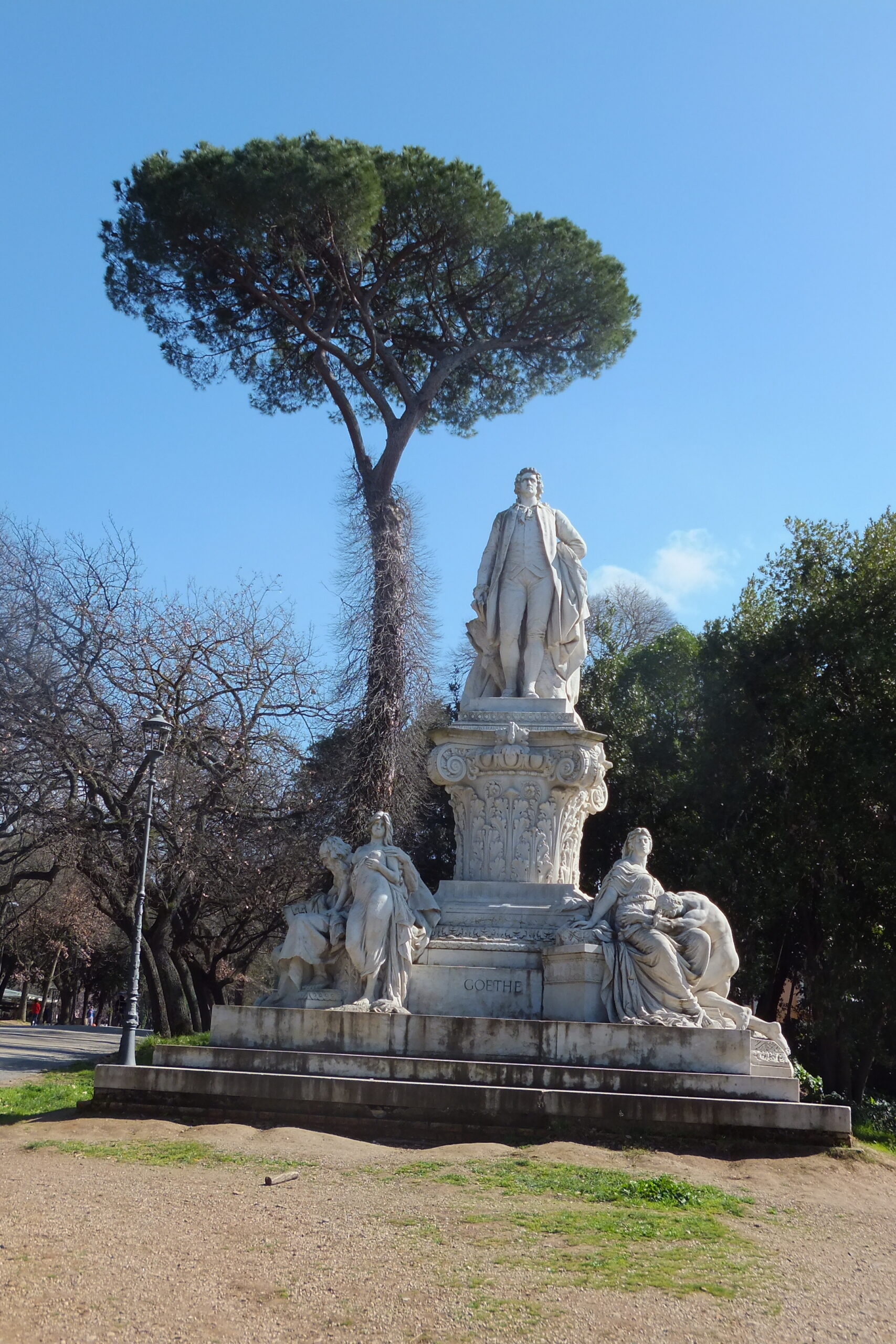
This statue of Goethe (in Viale Goethe) was presented in 1904, on behalf of Kaiser Wilhelm II of Germany.

This statue of Byron (in Via della Pineta) is a copy of the one at Trinity College Cambridge and was inaugurated around 1959.
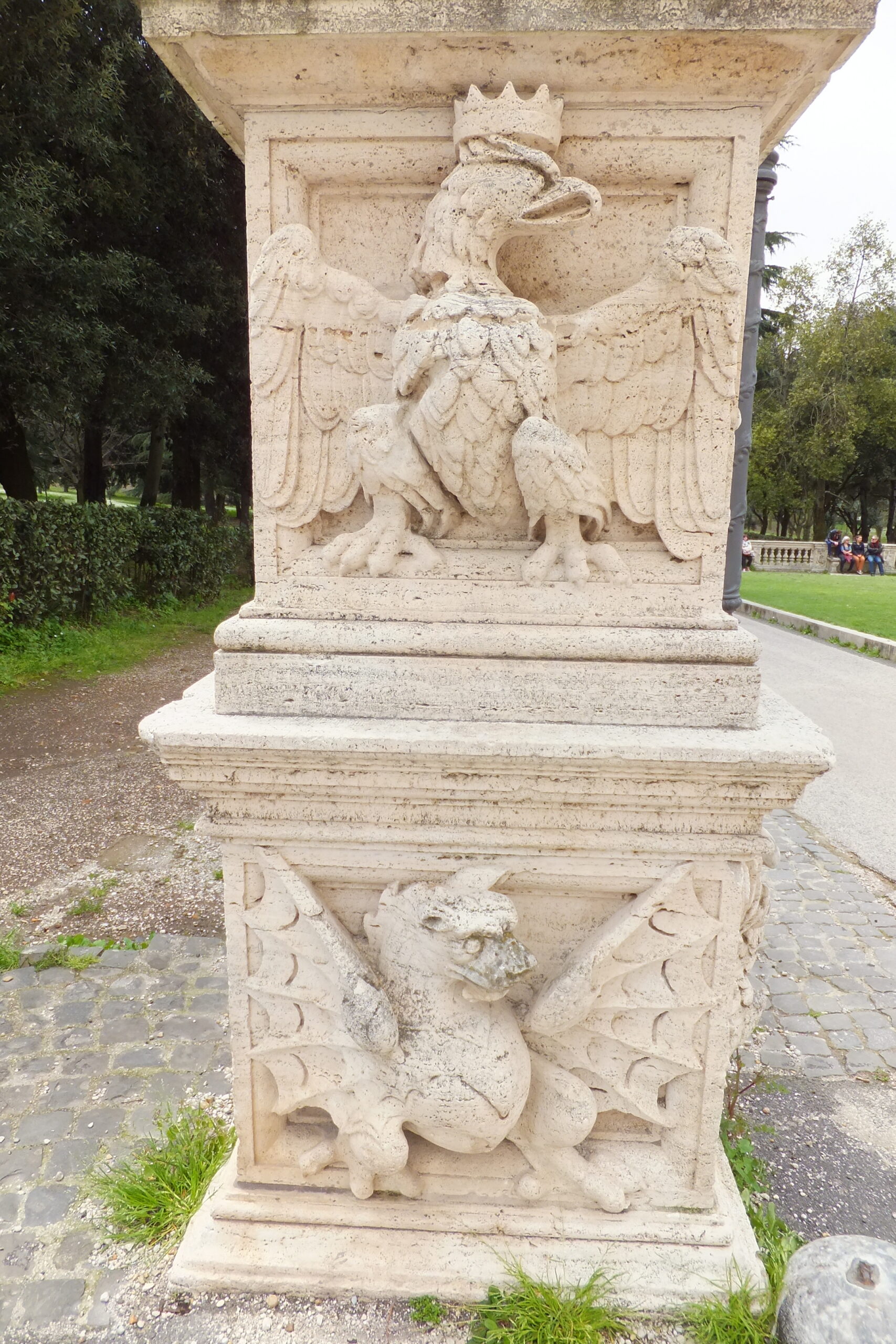
Surrounding the Villa Borghese (the Gallery) you will see numerous sculptures of eagles and dragons, which form the heraldic symbols of the Borghese family.

The water clock
The water clock was constructed by Fr Giovanni Battista Embriaco around 1873.
It is situated in Via dell’Orologio, on an islet and resting on a cast iron base. The clock is about 4 metres tall and has glass panes and dials on each side.
A jet of water fills alternately each of two basins, which oscillate like a balance, turning the hands. The water flow also powers the clock’s chimes.
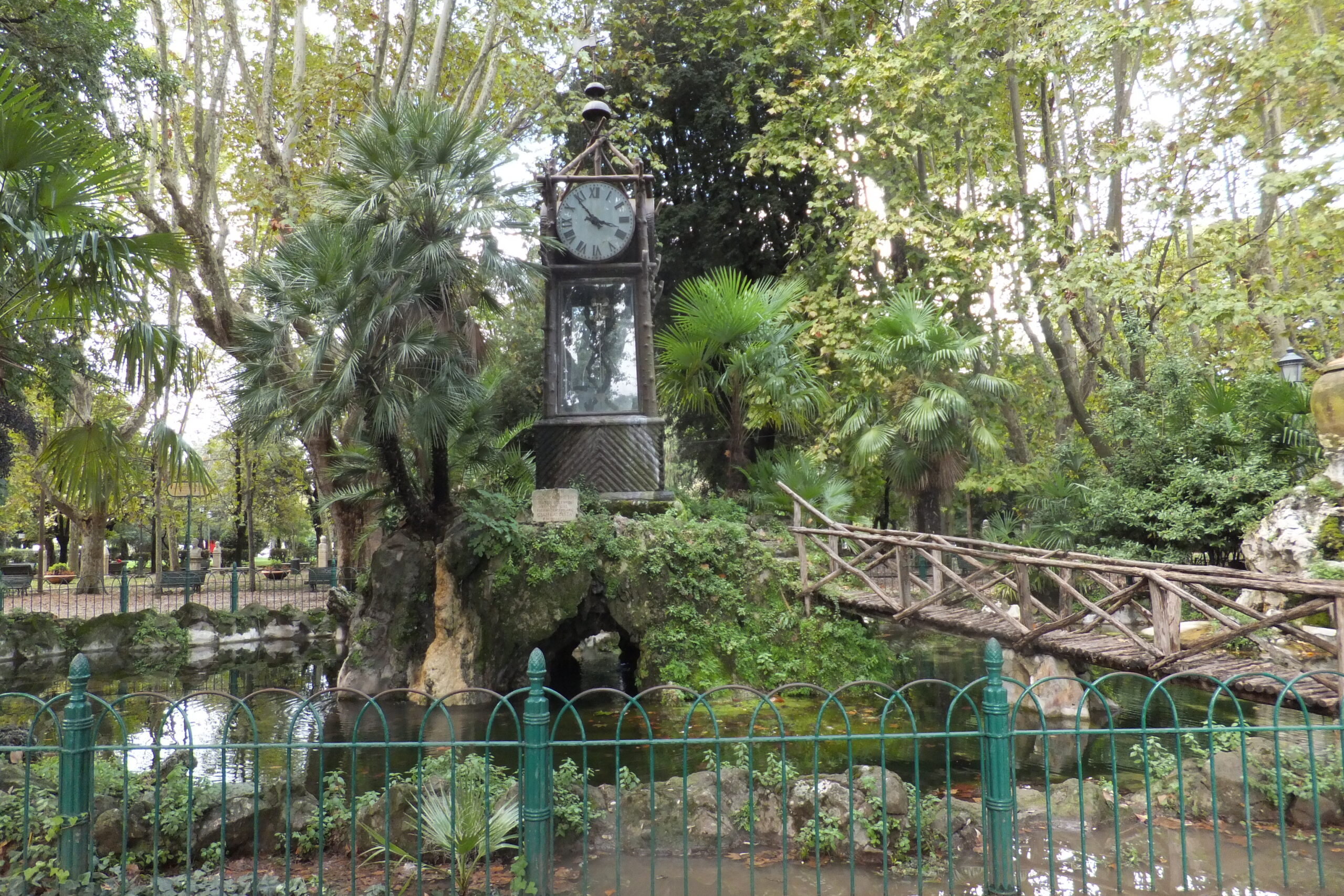
The clock has undergone restoration in the past few years, largely because of its exposure to the elements. It is now, once more, fully operational.
Piazza di Siena
This Piazza dates from the 1790s and is used for al fresco performances and show jumping.
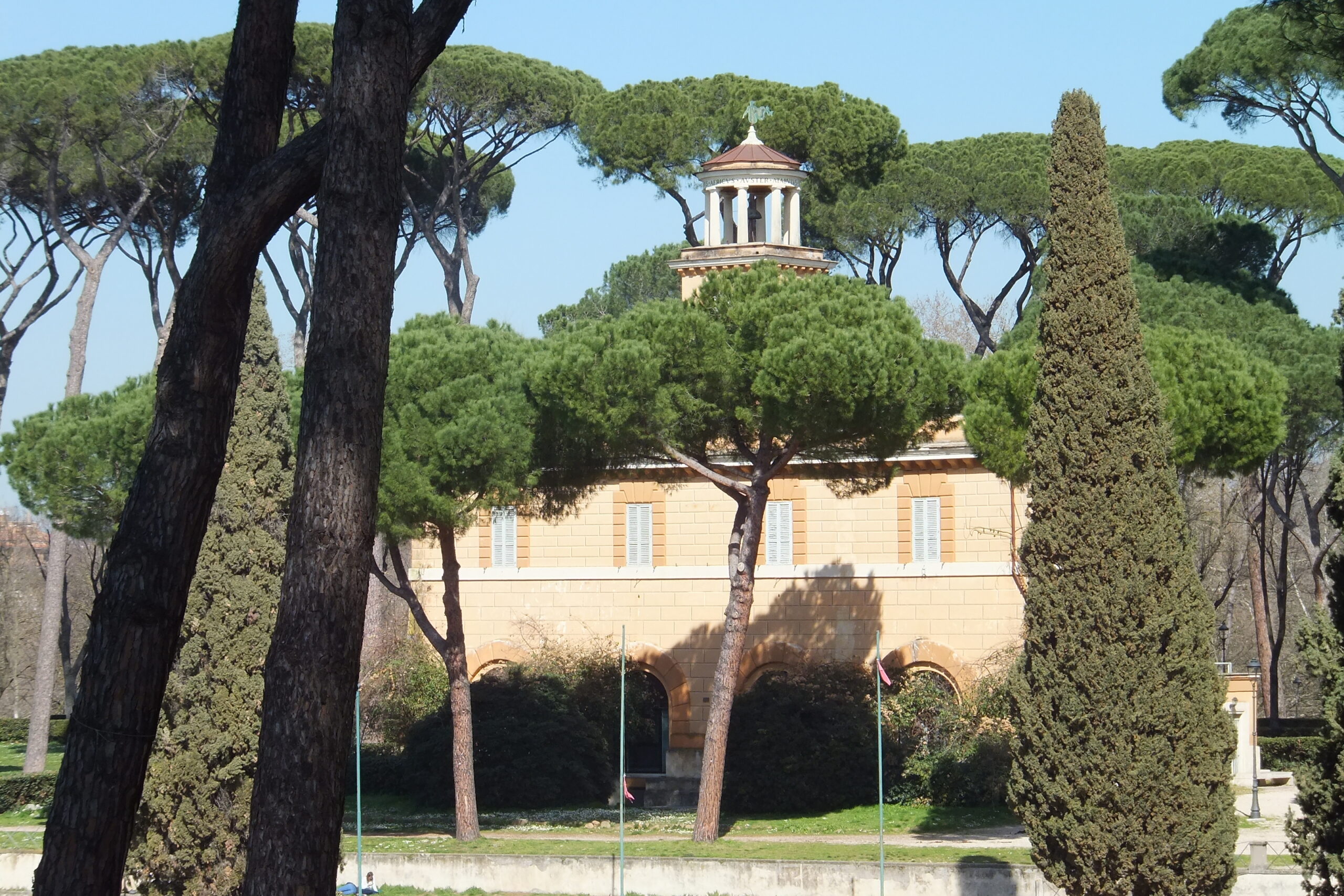

The building overlooking it is the Casina dell’ Orologio (“casina” or “casino” was the name traditionally given to houses and buildings on a country estate). It was built in the 16th century, originally for use as living quarters for the gardener and underwent a transformation in the 17th century, which is almost certainly when the clock was installed.
Today, the building accommodates offices of the Capitoline Superintendence of Cultural Heritage.

The fountain with the turtle dates from 1911 and is in the adjacent Valle Giulia.
The Fontana dei Cavalli Marini
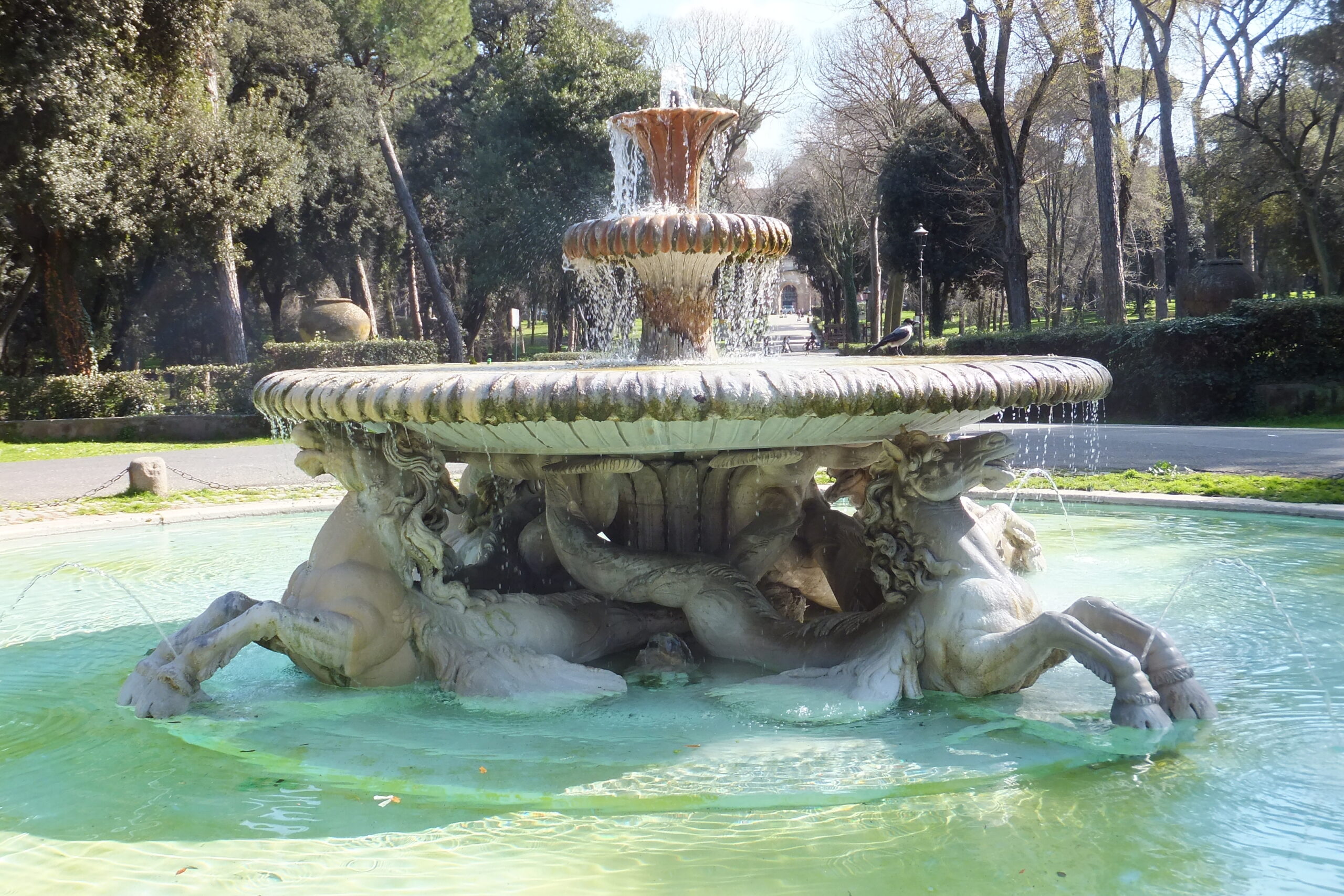
This beautiful fountain, borne by sculptured horses, stands in its own Piazzale. It was part of the works initiated by Marcantonio Borghese, 5th Prince of Sulmona, in the 18th century.
The fountain is based on a design by Christopher Unterberger and was executed by Vincenzo Pacetti.

These gardens are special and they evolve with the seasons. I love to spend time here and, each time I visit, I see something new.